

Four Worlds, One Language
Restaurant data lives in silos. Guest profiles sit in loyalty systems. Menus live in ordering platforms. Nutrition facts hide in spreadsheets. Transaction history scatters across POS systems. EveryBite connects these worlds—and the key that unlocks everything is food.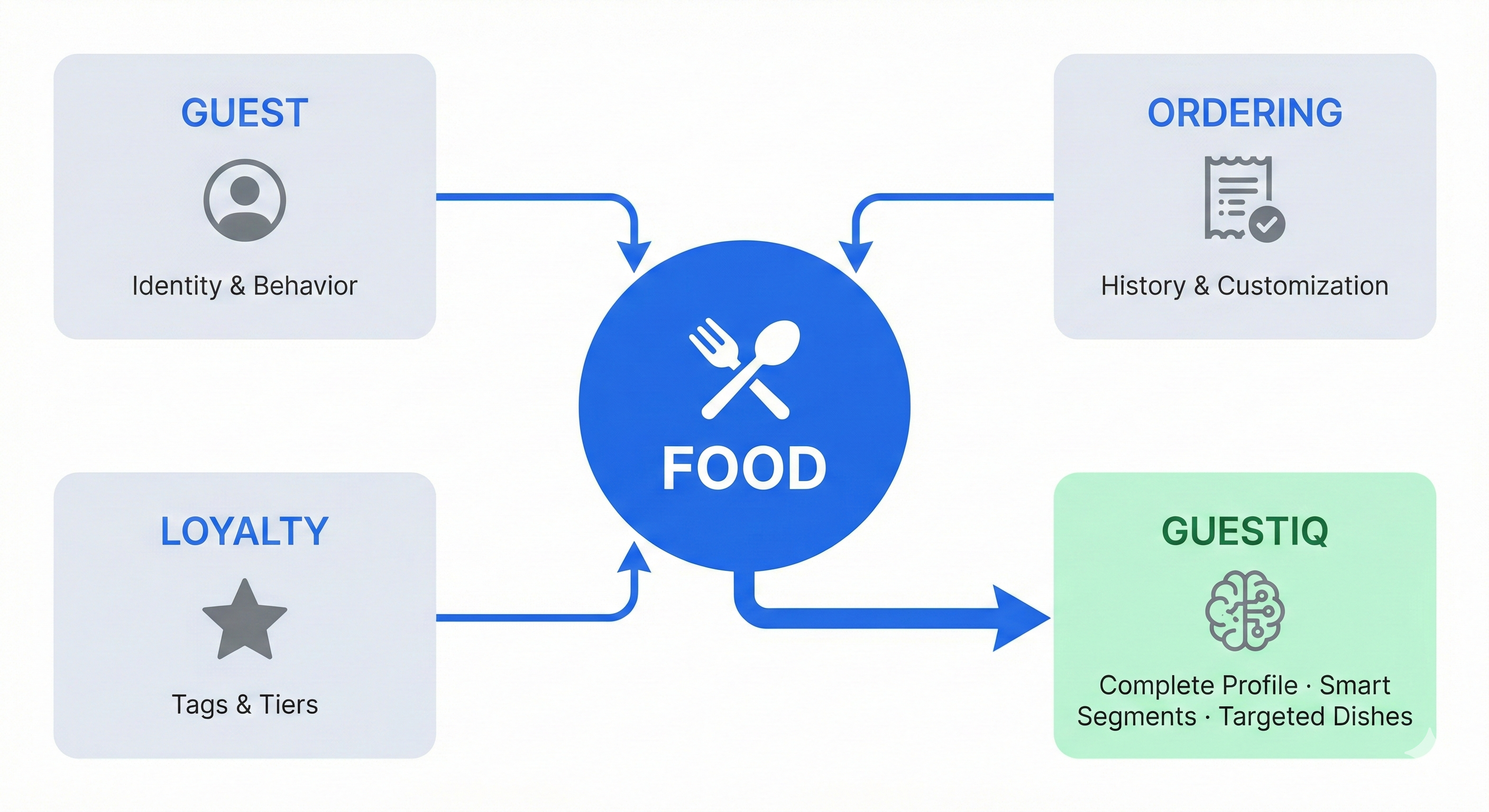
Guest
Who they are, what they want, how they behave
Food
Menus, recipes, ingredients, nutrition, allergens
Ordering
What they ordered, how they customized, when & where
Loyalty
Points, tiers, tags, segments, campaigns
The insight: You don’t truly know a guest until you understand their relationship with food. Loyalty points tell you they’re valuable. Order history tells you they visit Tuesdays. But food tells you they’re managing a wheat allergy, building muscle, feeding a family, or celebrating a birthday with something indulgent.
The Four Domains
1. Guest
Who is this person? The guest domain captures identity, preferences, and behavior:
But identity alone is shallow. Knowing Sarah is a “Gold member who visits twice a week” doesn’t tell you what she wants to eat.
2. Food
What can they eat? The food domain is the Ingredient Intelligence layer—a seven-level hierarchy from menu down to ingredient specification:
This depth is what makes EveryBite different. We don’t just know “Caesar Salad”—we know the dressing contains anchovy and egg, the croutons have wheat, and the parmesan is dairy. We trace allergens through every layer.
3. Ordering
How do they buy? The ordering domain captures transactions and customization:
Order data shows what happened. But without food intelligence, you can’t answer why they customized, or what else they might like.
4. Loyalty
What do their programs know? The loyalty domain pulls data from third-party systems:
Loyalty platforms know value and engagement—but they don’t understand food. They can’t tell you if a “high-value customer” can actually eat your new menu item.
Food: The Connective Tissue
Here’s the key insight: Food is how you understand people. Without food intelligence, the other domains are disconnected:
Food turns data into understanding. It answers:
- Why does she order that dish? (It fits her dietary needs)
- What else would she like? (Other high-protein, wheat-free options)
- How should we personalize? (Highlight compatible dishes, warn about allergens)
- When is she at risk? (If we remove her favorite dish, she might churn)
“EveryBite” — The name isn’t accidental. Every bite tells you something about the person. What they choose, what they avoid, how they customize—these are signals that reveal who they are and what they want.
How the Domains Connect
Guest + Food = Personalization
When a guest opens the menu, we know their dietary restrictions before they search:Ordering + Food = Understanding
When a guest customizes, we understand why:Loyalty + Food = Actionable Segments
Loyalty tags become meaningful when combined with food:Guest + Ordering + Loyalty + Food = GuestIQ
When all four domains connect, you get complete guest intelligence:1
Data Sources Flow In
Guest (identity & behavior) + Ordering (history & customization) + Loyalty (tags & tiers)
2
Food Intelligence Processes
The Ingredient Intelligence layer analyzes everything through the lens of food—what they can eat, what they prefer, what they avoid.
3
GuestIQ Delivers
Complete Profile · Smart Segments · Targeted Dishes
What This Means in Practice
For Menu Personalization
A guest opens your app. Before they search, you already know:- Their restrictions: Wheat-free, peanut allergy
- Their preferences: High-protein, prefers lunch portions
- Their patterns: Usually customizes, price-sensitive
- Their favorites: Ordered the Power Bowl 6 times
For Campaign Targeting
You’re launching a new high-protein grain bowl. Who should see the promo?
Food intelligence makes campaigns precise, not spray-and-pray.
For Staff Alerts
A VIP guest walks in. Your host stand shows:Sarah M. — Gold member, 24 visitsThe staff can greet her by name and recommend something she can actually eat.
- Wheat allergy (verified)
- Prefers: Power Bowl, Stir-Fry
- Usually adds: extra protein
- Note: Birthday this month
For Product Development
Which dishes should you add to the menu?The Data Model Summary
Food is the key. It transforms:
- Anonymous visitors into understood guests
- Transaction data into dietary insights
- Loyalty tiers into actionable segments
- Generic menus into personalized experiences
Learn More
Ingredient Intelligence
Deep dive into the seven-layer food hierarchy
GuestIQ
How we deliver complete guest profiles at session creation
SmartMenu Search
Personalized menu search powered by food intelligence
Session API
Start sessions and receive guest intelligence